2026-10-10 · Rick Harlan
Fort Lauderdale Luxury Home Water Damage After Hurricane Season
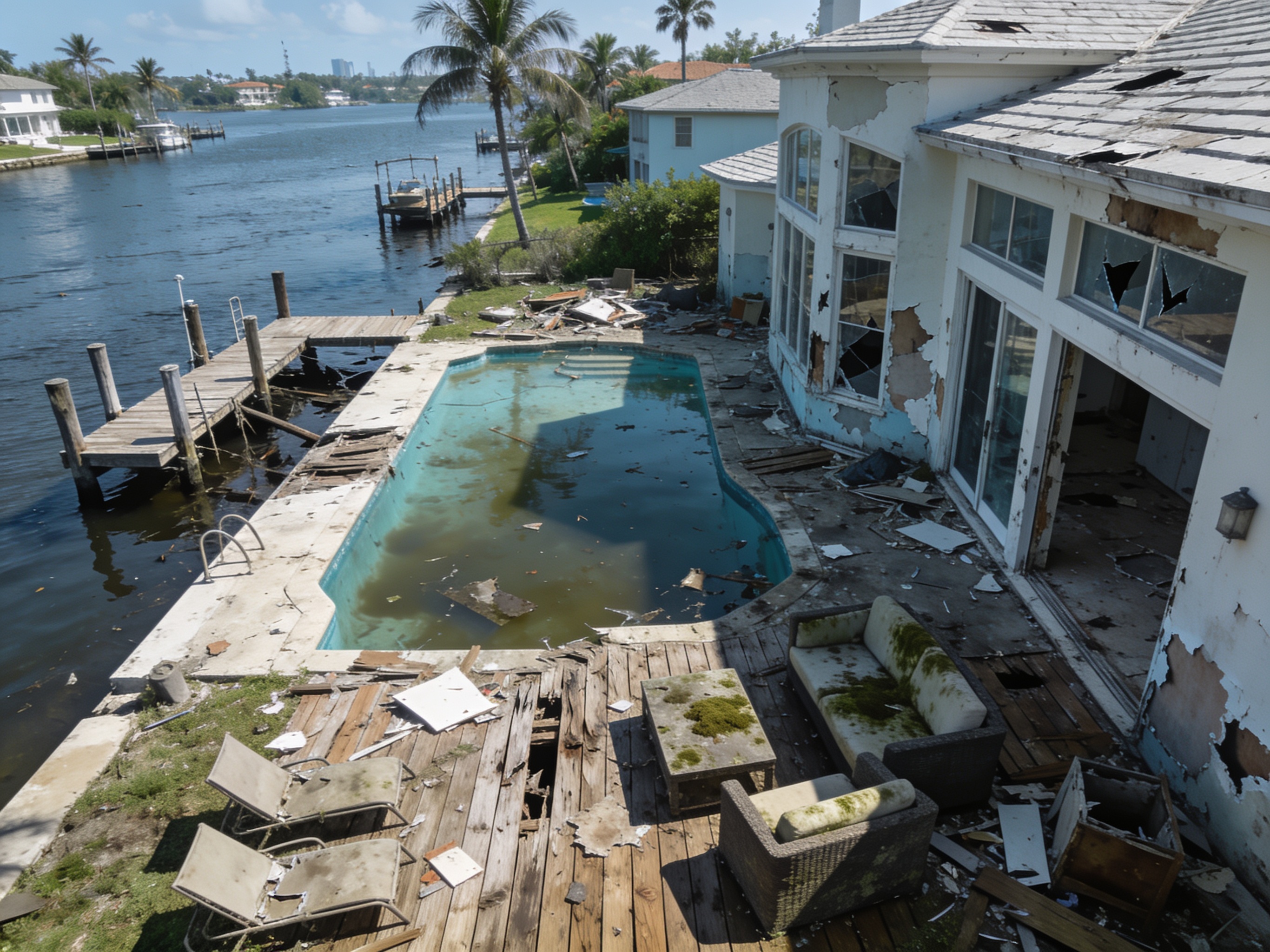
Fort Lauderdale luxury homes commonly experience water intrusion from canal flooding that saturates foundations and walls for days after storms pass through Broward County. Immediate water extraction followed by structural drying limits damage in neighborhoods including Las Olas Isles and Tarpon River, where older luxury stock sits close to tidal waterways.
Canal Flooding Patterns After Peak Hurricane Season
Tropical monsoon conditions bring heavy rains from June through October that push saltwater and debris into luxury properties along Fort Lauderdale's canal systems. Homes in Downtown Fort Lauderdale and Rio Vista often see water enter through lower-level garages and seawalls, saturating concrete slabs and hardwood subfloors. Properties near Pompano Beach and Oakland Park experience similar backflow when storm drains overwhelm. These events differ from typical summer showers because hurricane-driven surges carry sediment that clogs weep holes and extends drying times by several days. Water extraction crews must first remove standing water before addressing trapped moisture behind luxury finishes.
Hidden Damage Risks in Las Olas Isles and Victoria Park Homes
Luxury residences built decades ago in Las Olas Isles and Victoria Park frequently have plaster walls and original hardwood floors that absorb water upward from flooded yards. After canal flooding, moisture migrates into second-story ceilings when attics lack proper ventilation, creating conditions for hidden mold colonies. Nearby landmarks such as the Stranahan House and Bonnet House sit in zones where groundwater tables remain elevated for weeks. Homeowners who inspect only visible surfaces miss saturation in insulation and behind built-in cabinetry. How to spot hidden water damage in Fort Lauderdale luxury homes outlines inspection points that match these older construction details.
Structural Drying Challenges in Coral Ridge and Rio Vista
Coral Ridge and Rio Vista properties often feature large open floor plans with travertine and custom millwork that trap moisture differently than standard builds. After hurricane season, high humidity from the wet season slows evaporation, requiring industrial dehumidifiers running continuously for 5–10 days on average. Saltwater intrusion from canals accelerates corrosion on metal framing and HVAC components. Structural drying protocols must account for the dry winter period that follows, when rapid temperature swings can cause already-saturated materials to crack if moisture is not fully removed first.
Long-Term Effects and Next Steps for Waterfront Owners
Unchecked water after canal flooding leads to warped doors, delaminated flooring, and elevated indoor humidity that affects entire homes in Tarpon River and Downtown Fort Lauderdale. What affects water damage repair costs in Fort Lauderdale waterfront homes details variables such as square footage of affected hardwood and access limitations around pools and docks. Owners who schedule follow-up moisture mapping before the next wet season reduce repeat issues. First Response Restoration maintains 24/7 response for these post-hurricane assessments across Broward County.